
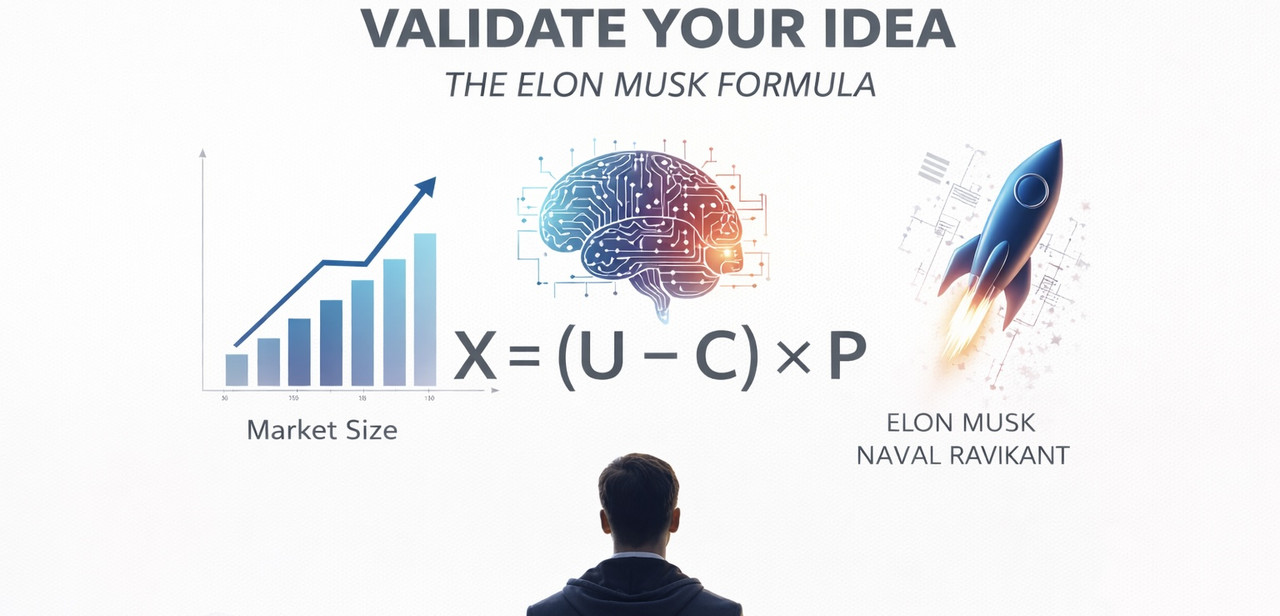
If I could give only one piece of advice to a startup founder, this would be it: Most founders waste years—sometimes entire decades—building something nobody wants. They fall in love with their solution before they understand if the problem is worth solving.
They chase features, polish the pitch deck, obsess over hiring, and completely miss the two fundamental questions that determine whether a business will succeed or fail.
This isn't about passion or vision or "following your dreams." Those things matter, but they come second. First, you need to run the cold, brutal math. Because if the math doesn't work, nothing else matters.
Before you commit the next five years of your life, before you spend your savings, before you convince anyone to join you—answer these two questions with complete honesty.
1. The Utility Gap: How Much Better Are You Really?
Here's the hard truth: being better isn't enough. Being 20% better isn't enough. Being 50% better usually isn't enough either. Your solution needs to be 10x better than what already exists.
Why? Because people are lazy. Switching is hard. The status quo has inertia. Even if your product is genuinely better, most people won't switch unless the improvement is so obvious, so dramatic, that staying with the old solution feels stupid.
The Formula
Value = (Your Solution - Current Best Option) × Number of People You Can Reach
Let's break this down:
- U (Your Solution): This is the utility—the actual value—your product delivers to users. How much better does it make their lives?
- C (Current Best Option): This isn't just your competitors. It's whatever people use now, including doing nothing. And you need to include the friction cost—the pain of learning something new, migrating data, changing workflows, convincing their team or their boss.
- The Utility Gap (U - C): This is everything. If this number isn't massive, you lose. Period.
What is the Utility Gap?
The Utility Gap is the measurable difference between the value your solution provides and the value of the best existing alternative. It's not about features or aesthetics—it's about the raw...